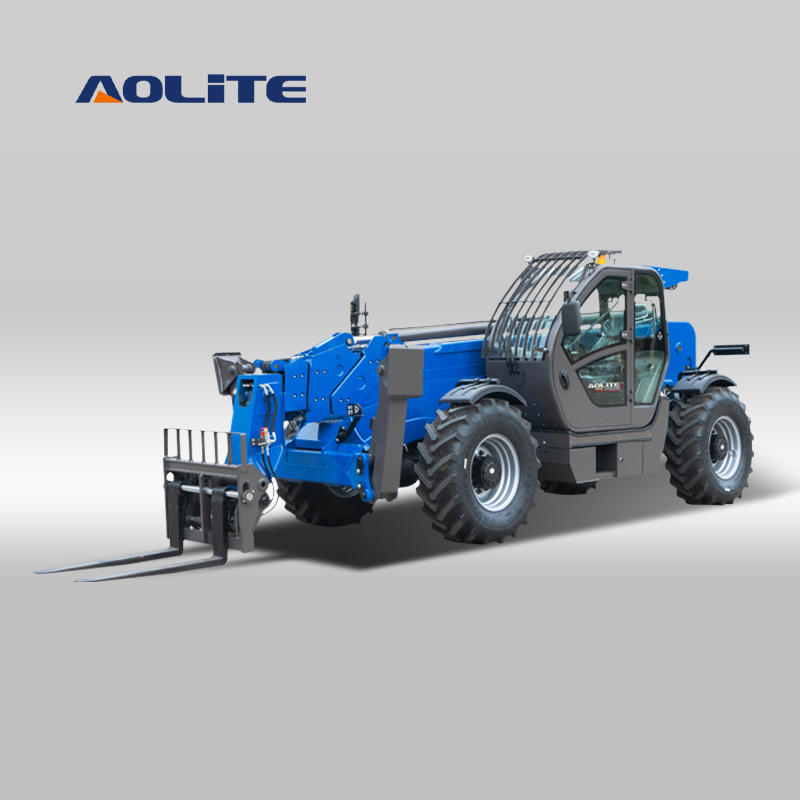
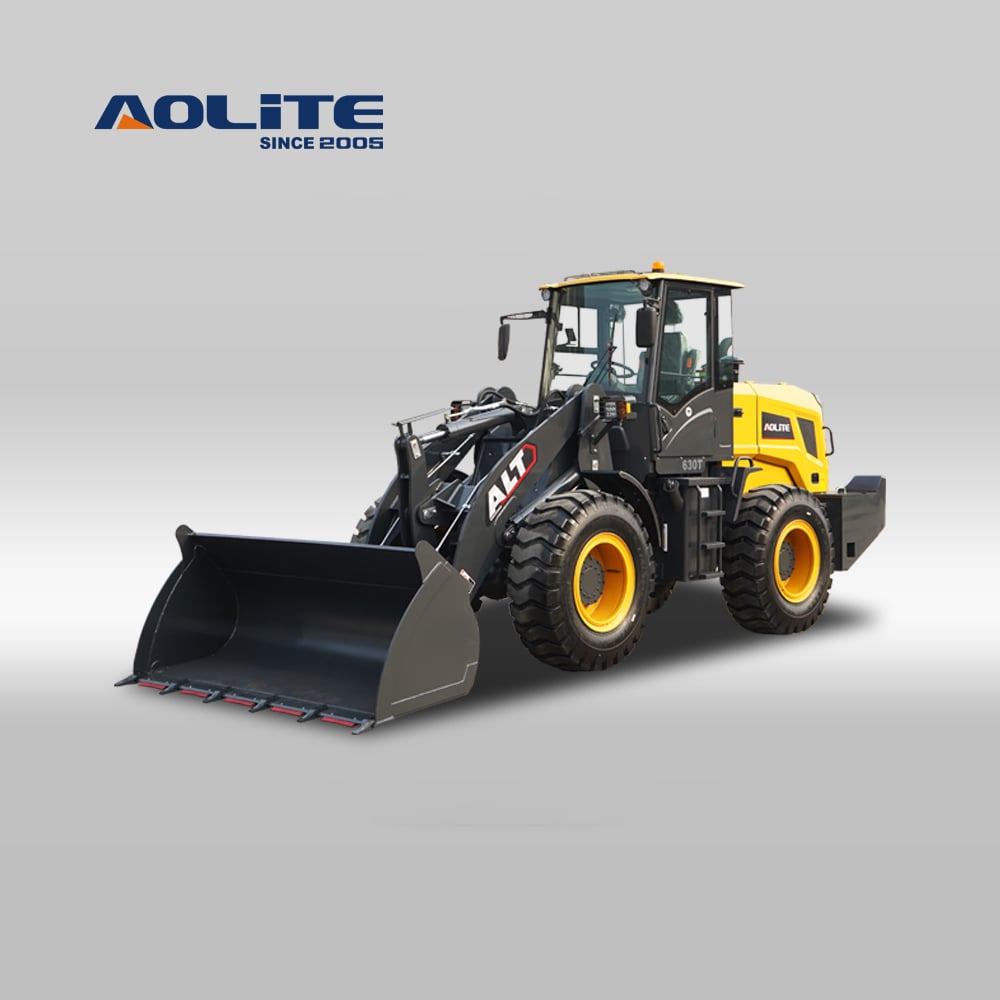
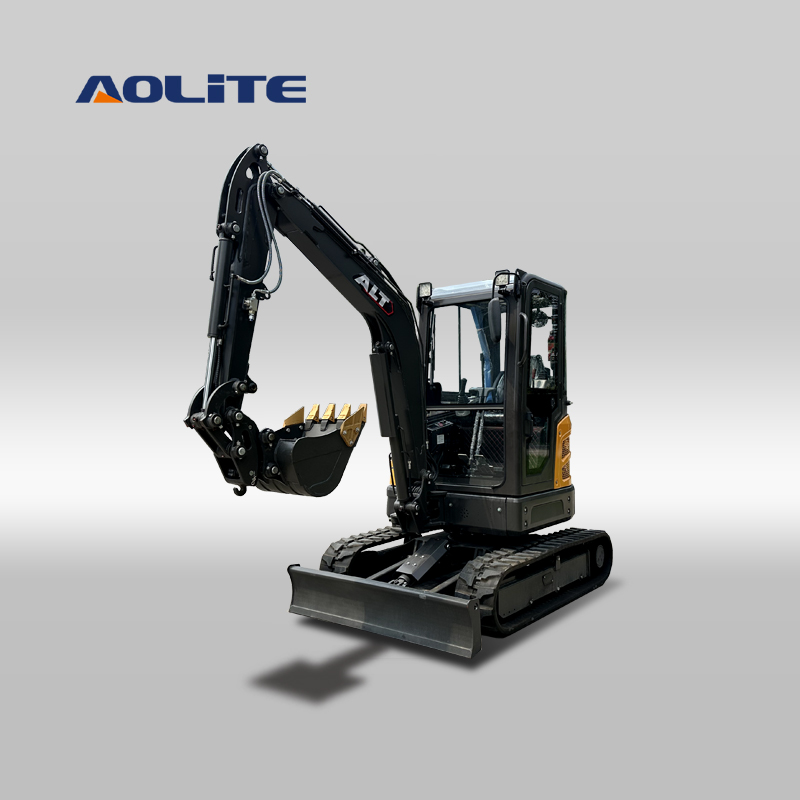
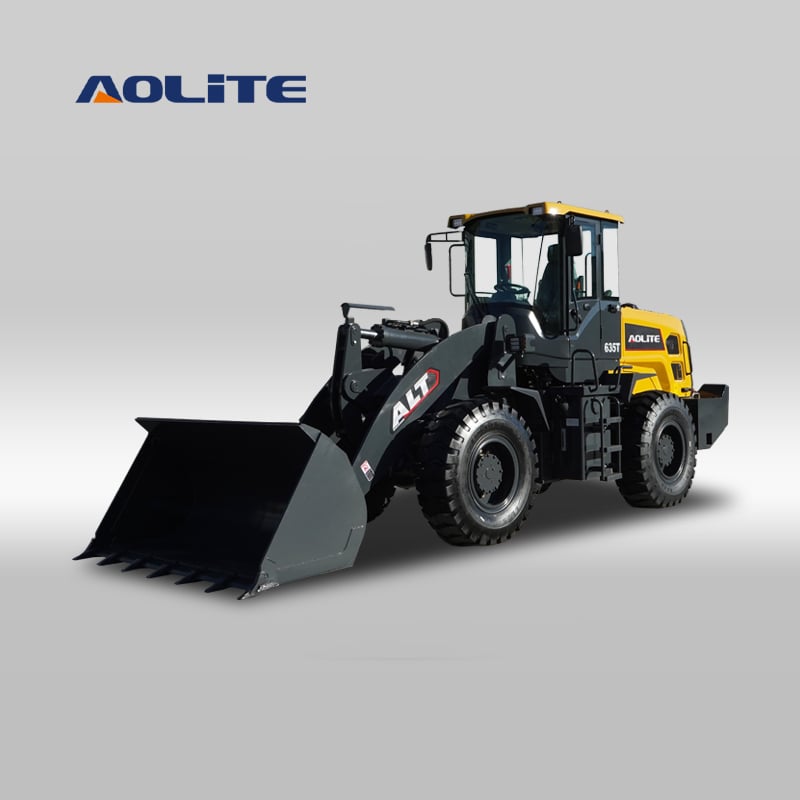
In the field of construction machinery, the performance of the transmission system directly determines the operational efficiency, controllability, and reliability of equipment.In recent years, hydrostatic transmission technology has gradually become an important technical direction for loaders, owing to its outstanding continuously variable speed control, precise handling, and efficient energy transfer characteristics. This article explores the core principles of hydrostatic transmission systems from the perspective of AOLITE product applications.
I. Closed-Loop Circuit----The Core Architecture of Hydrostatic Transmission
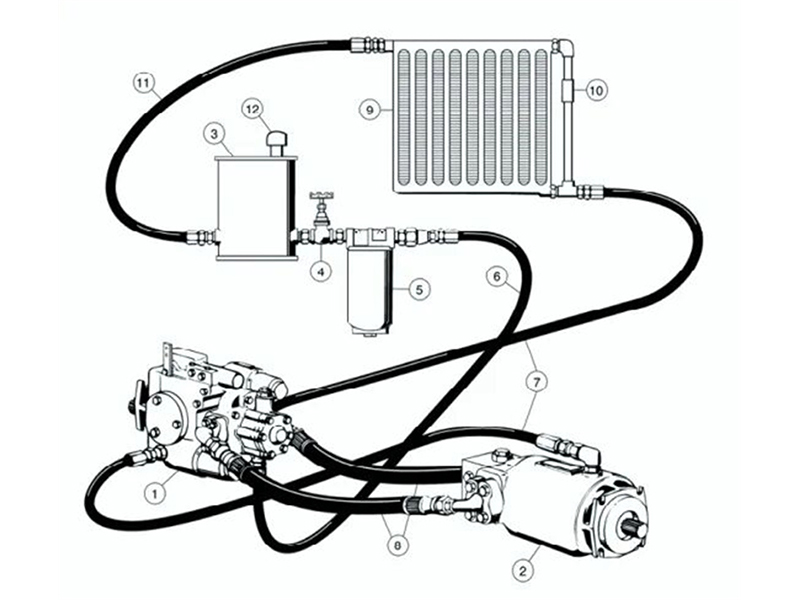
The core of a hydrostatic transmission system is a closed-loop circuit formed by a variable displacement piston pump and a fixed or variable displacement motor. In this circuit, the oil flows from the pump to the motor and then directly back to the pump, rather than returning to the tank as in an open-loop system. This design offers significant advantages: fast system response, high efficiency, and a compact structure.
A closed-loop circuit requires makeup oil to compensate for losses caused by internal leakage. This task is handled by a charge pump, which can be either built-in or external.The charge oil not only maintains system pressure but also flushes and cools the circuit—both are essential for reliable operation.
Closed-loop systems are widely used in construction machinery, including:
Construction equipment: concrete mixers, rollers, pavers, loaders, bulldozers, etc.
Material handling and municipal construction: cranes, sweepers, forklifts.
Agricultural machinery: tractors, harvesters, swathers, water trucks, seeders.
Industrial applications: oil and gas equipment, marine machinery.
For AOLITE, our loaders represent the ideal application of closed-loop hydrostatic transmission systems.
II. Three Basic Operating Modes: Neutral, Forward And Reverse
Despite a wide operating range, a hydrostatic transmission system operates in three basic modes. A thorough understanding of the three modes is indispensable for both operators and maintenance personnel.
1. Neutral Mode
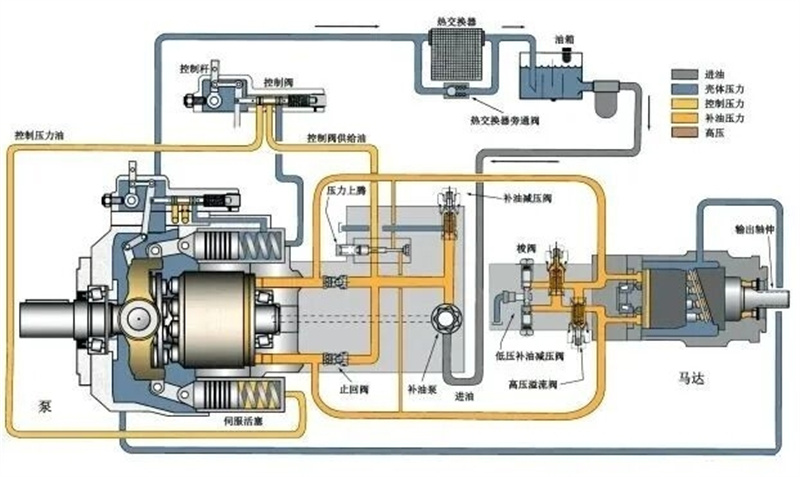
When the displacement of the variable pump is zero, the system is in neutral. In this state, no high-pressure oil is delivered to the motor and the output shaft stops rotating.
How neutral mode works: The operator pushes the control lever to neutral, and the control spool centers accordingly. The centered spool connects both lines of the servo piston to the housing while cutting off the control pressure line. The servo spring returns the variable swashplate to neutral. As the cylinder block rotates, the pistons no longer reciprocate, and therefore no high-pressure oil is pumped.
It is worth noting that even in neutral, the charge pump continues to operate. It draws oil from the tank and delivers it into the pump piston chambers, high-pressure lines, and motor piston chambers to compensate for internal leakage and keep the circuit filled with oil. Once the high-pressure circuit is topped up, the charge pump opens the charge relief valve, directing the oil to flow through the pump housing and back to the tank. This process provides flushing and cooling for the system.
Significance for AOLITE:
In neutral mode, the loader can achieve an idling standby state—keeping the system ready to respond at any time while avoiding energy waste.
2. Forward and Reverse Modes
The principles of forward and reverse modes are similar, except that the oil flow direction is opposite. When the oil in the high-pressure circuit drives the motor shaft to rotate, the system enters forward or reverse mode.
How the oil flow is generated:
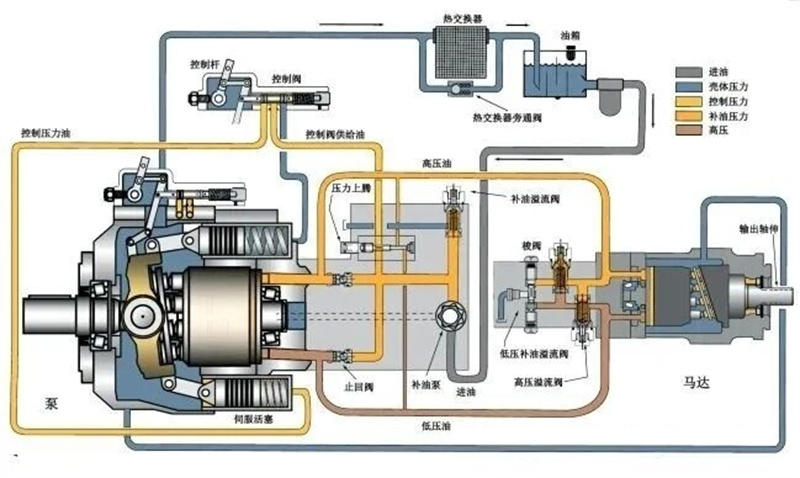
By tilting the swashplate of the variable pump from its neutral position to one side, the pistons reciprocate as the cylinder block rotates, producing a high-pressure oil flow. The swashplate can tilt to either side of center—tilting in one direction generates forward oil flow, while tilting in the opposite direction reverses the flow, and the motor output shaft rotates accordingly.
Speed and direction control:
The swashplate angle determines the output speed. The maximum swashplate angle corresponds to maximum displacement, yielding the maximum motor speed. The operator can set both speed and direction with a single control lever:
Lever centered → neutral
Lever moved to one side → forward
Lever moved to the other side → reverse
Distance the lever is moved → speed
How the control circuit works:
The control pressure, set by the charge relief valve, is supplied by the charge pump. When the operator moves the control lever, the control pressure is directed to the corresponding servo piston, tilting the swashplate. The feedback linkage between the swashplate and the spool ensures that the swashplate is precisely maintained at the set angle, delivering stable speed output.
Implications for AOLITE:
Loaders frequently perform forward/reverse movements and digging/lifting operations. The continuously variable speed control and rapid direction reversal capabilities of hydrostatic transmission can significantly improve operational efficiency and reduce shift shocks.
III. Key Auxiliary Valves and Housing Flushing
In a hydrostatic transmission, in addition to the main pump and motor, several key valves are used to ensure system safety and heat dissipation.
1.Shuttle valve and charge relief valve
When the control lever is moved forward or backward, the spring‑centered shuttle valve in the motor block shifts, connecting the low‑pressure side to the charge relief valve. When the back pressure is high enough, the charge relief valve in the motor block opens, allowing the charge pump flow to enter the motor housing for cooling. Typically, the charge relief valve in the motor block is set at a lower pressure than the one in the pump end cap, so the housing oil flows from the motor to the pump and then returns to the tank.
2. High‑pressure relief valve
When the motor stalls and the pressure reaches the preset safety level, the high‑pressure relief valve opens, connecting the high‑pressure side to the low‑pressure side to protect the system from damage due to overload. Two high‑pressure relief valves are provided in the system, one for forward operation and the other for reverse.
These design features ensure that AOLITE products operate reliably even under severe conditions involving heavy loads and frequent start‑stop cycles.
IV. Application Advantages of Hydrostatic Transmission in AOLITE Loaders
Given the product features of AOLITE, the hydrostatic transmission system offers the following key advantages for our equipment:
1. Continuously variable speed control for easy operation
The operator does not need to shift gears frequently; simply moving the control lever achieves a smooth transition from zero to maximum speed, significantly reducing operator fatigue.
2.Precise control for enhanced operational efficiency
When the loader is performing precise positioning tasks, the micro‑motion control capability of the hydrostatic transmission significantly outperforms conventional transmission systems.
3.Rapid response with minimal energy loss
In a closed-loop circuit, the oil circulates directly, reducing energy transfer losses, while the charge pump system ensures superior response speed.
4.Safety protection for extended service life
The high‑pressure relief valve and the charge relief valve work together to provide multiple protection mechanisms, effectively preventing overload and overheating, and extending the service life of the pump, motor, and the entire transmission system.
5.Adaptability to harsh operating conditions
The housing flushing circuit continuously removes heat and contaminants, enabling AOLITE products to maintain stable performance even under high‑intensity, continuous operation.
The hydrostatic transmission system represents an important development direction for transmission technology in construction machinery. For AOLITE, a deep understanding of the control principles of the three operating modes—neutral, forward, and reverse in closed-loop circuits, along with a firm grasp of key mechanisms such as charge, flushing, and relief protection, will not only help enhance the performance of our current loaders but also lay a solid technical foundation for developing a new generation of highly efficient, energy-saving, and intelligent products.
Looking ahead, AOLITE will continue advancing the application and optimization of hydrostatic transmission technology, delivering superior equipment performance to users and fueling the sustained progress of the construction machinery industry.
 Hot News
2026-09-30
2026-09-15
2026-08-31
2026-08-21
2026-08-07
2026-07-22
Copyright © Qingzhou Longfeng Machinery Technology Co., Ltd. All Rights Reserved — Privacy Policy
 EN
EN