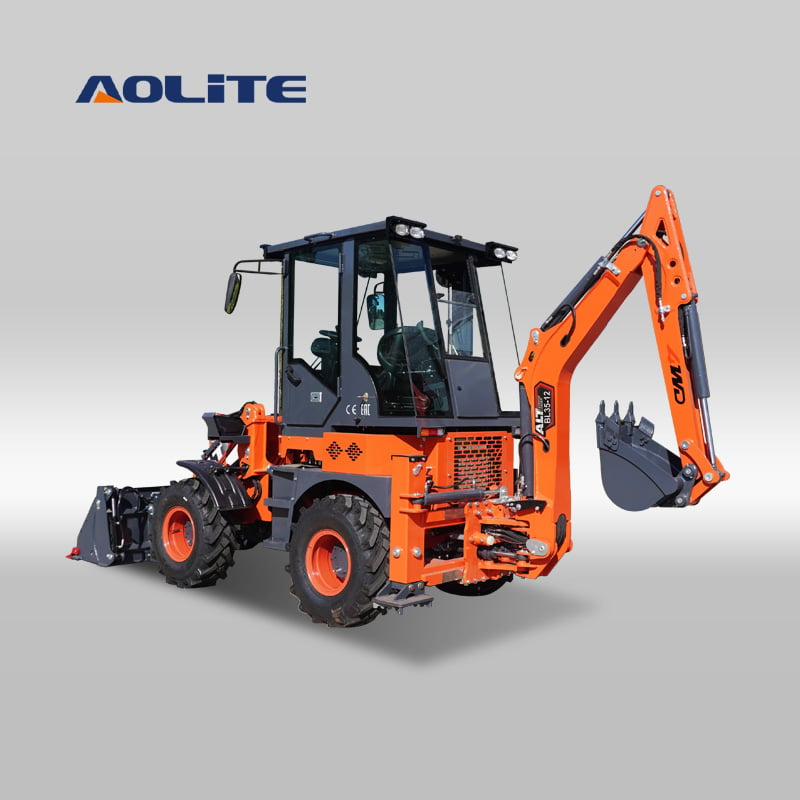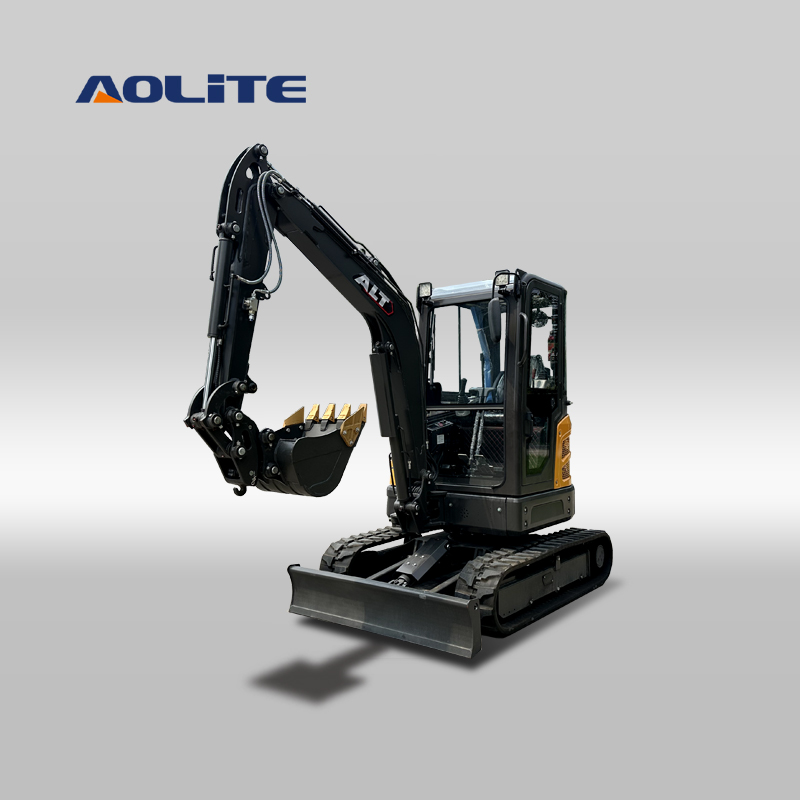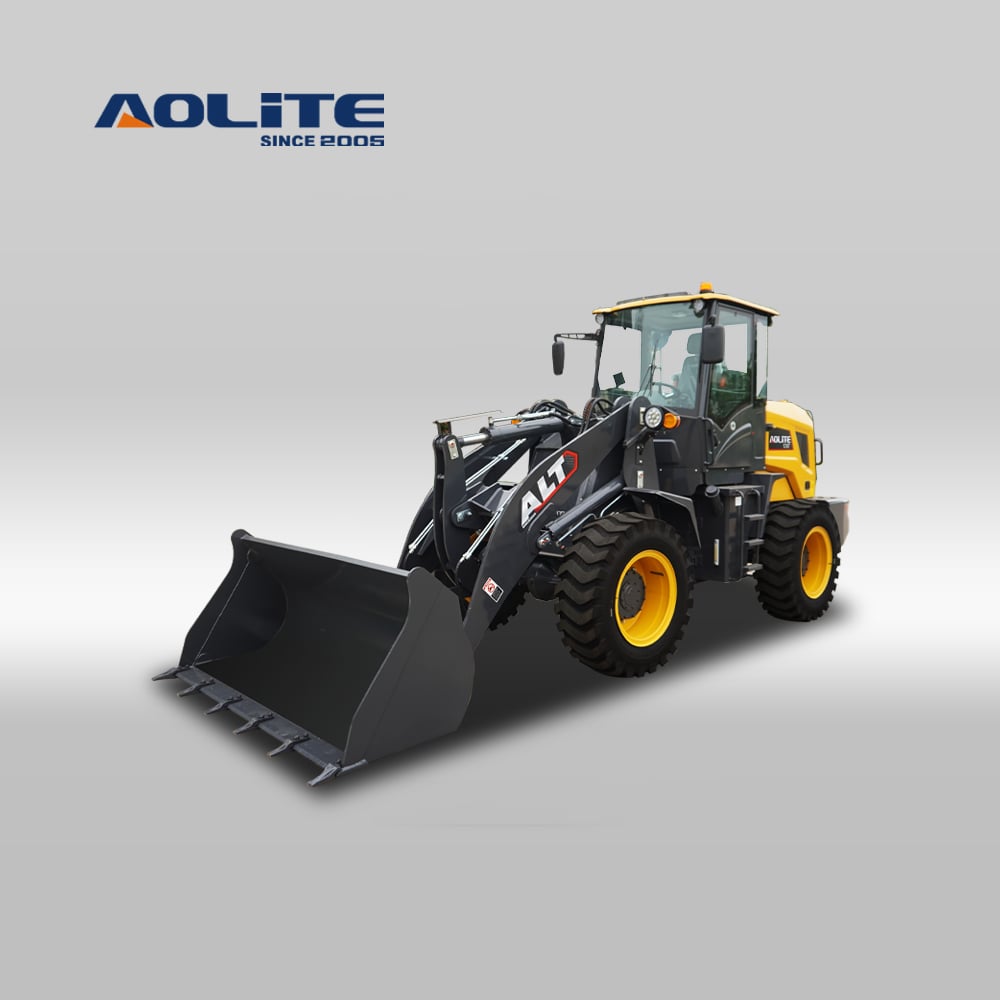
There is a concept rarely discussed openly in the construction equipment industry, yet every machine owner has their own way of measuring it: the “Replacement Threshold”. It is not a red mark on a dashboard. It is a financial tipping point. When the combined cost of repairs, downtime, and recurring failures begins to approach—or even exceed—the cost of purchasing a new wheel loader, the machine stops being a profit-generating asset and starts becoming a money pit.
As a heavy equipment manufacturer, AOLITE has seen too many wheel loaders reach this point. It is not that the machine cannot be repaired. The real question is whether continuing to repair it still makes economic sense. Today, using AOLITE wheel loaders as an example, let's take a closer look at this critical threshold—and what it really means for your bottom line.
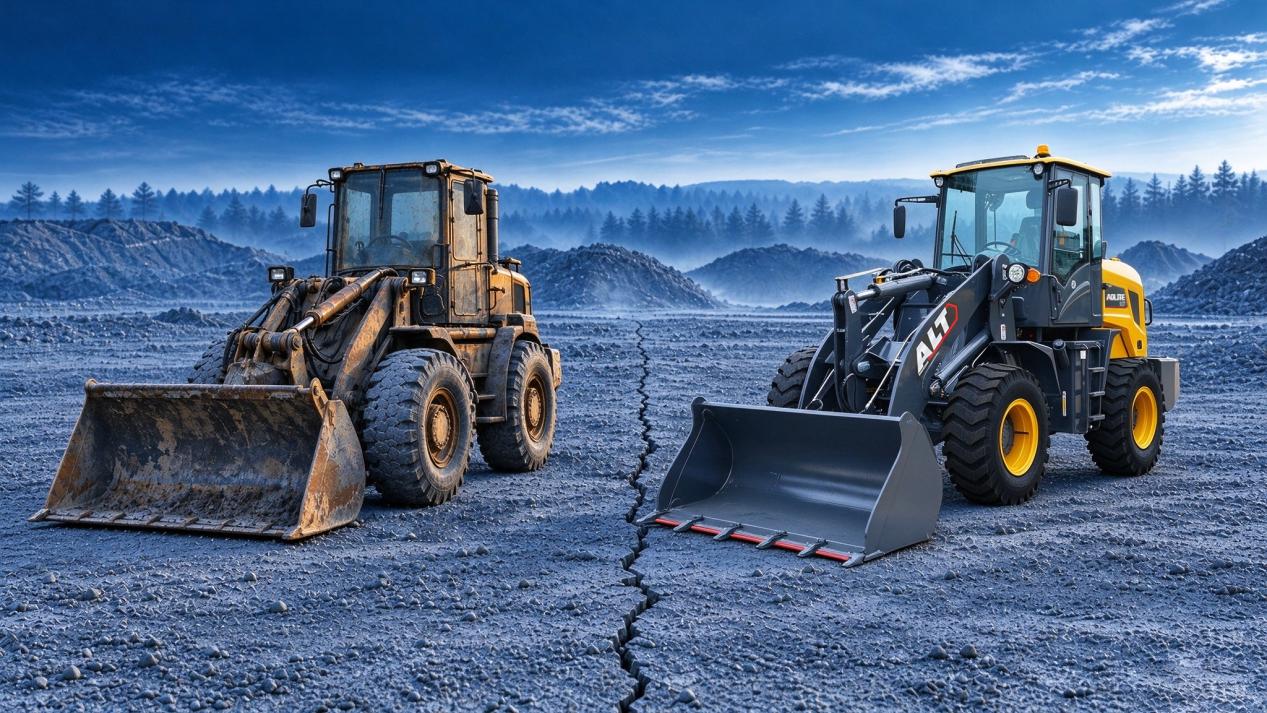
Wheel Loaders Have a “Bathtub Curve” Too
Every wheel loader eventually follows the classic bathtub curve of equipment failure rates: After leaving the factory, a new machine typically goes through a short early-life failure period, when occasional issues may occur during initial operation and commissioning. With proper adjustment and maintenance, the failure rate then stabilizes. The machine subsequently enters the random-failure period, when failure rates are at their lowest. This is the golden stage of the machine's life—the period when it delivers the greatest value and productivity. But as critical components begin to age and wear, the machine eventually enters the wear-out failure period. Failure rates rise sharply. And this is where the “Replacement Threshold” begins to emerge.
For AOLITE loaders—from the E604 to the 635T, covering machines from the 0.4-ton class to the 3.5-ton class—we continuously pursue greater durability through engineering and manufacturing. But no mechanical machine can escape the laws of physics. The difference is that with scientific maintenance and proper machine management, the productive service life can be extended for as long as possible, while rough operations and poor maintenance can accelerate the journey toward the Replacement Threshold.
Remarks:
The “Bathtub Curve”: A Classic Concept in Reliability Engineering. The bathtub curve is a well-established concept in reliability engineering, product lifecycle analysis, and failure analysis. Its name comes from its shape, which resembles the cross-section of a bathtub: a steep decline on the left, a relatively flat middle section, and a steep rise on the right. It illustrates how a product's failure rate changes throughout its life-cycle—from early-life failures, through a stable operating period, and finally into the wear-out stage.
Three Major Failures That Can Push a Loader Toward the Replacement Threshold
So, what major failures can push a wheel loader toward this critical point? Based on industry data and aftermarket feedback, three major systems stand out.
1.Hydraulic System Failure
The hydraulic system is like the blood vessels and muscles of a wheel loader. It powers virtually every critical function, including lifting, bucket operation, and steering. Industry data indicates that hydraulic failures can account for approximately 30–40% of total wheel loader failures. Once critical components such as the main hydraulic pump or main control valve suffer serious damage, repair costs can quickly reach thousands or even tens of thousands of RMB. Hydraulic oil contamination can accelerate pump wear, and in severe cases, repair costs may increase by as much as 300%.
2.Major Engine Failure
The engine is the heart of a conventional wheel loader. If poor maintenance leads to serious problems such as cylinder scoring, bearing seizure, or turbocharger failure, an engine overhaul can easily start at RMB 10,000–20,000, and the cost can be considerably higher under heavy-duty operating conditions. Engine performance degradation accounts for approximately 35% of powertrain-related failures, making it one of the biggest potential repair expenses.
3. Drivetrain Failure
The torque converter, transmission, and drive axles are responsible for transferring engine power to the wheels. Problems such as torque-converter lock-up clutch slippage or planetary gear failure can result in repair bills exceeding RMB 10,000 per incident, sometimes by a significant margin.
When these three major systems begin experiencing serious failures, the machine is effectively approaching the Replacement Threshold.
The Economics: Why Replacing Can Make More Sense Than Repairing?
Determining whether a machine has crossed the Replacement Threshold is not simply about looking at a single repair quotation. You need to calculate three different costs.
First: Direct Repair Costs
Replacing a hydraulic pump may cost several thousand RMB. An engine overhaul may cost RMB 10,000 or more. These are the numbers that are easy to see. But they are only the beginning.
Second: The Cost of Downtime
This is often the most damaging hidden cost. When a project is under schedule pressure, one day of downtime for a critical wheel loader can result in delay penalties, replacement equipment rental, idle labor, and lost productivity. In many cases, these indirect costs can be several times—or even ten times—the repair bill itself. Some industry cases indicate that downtime caused by insufficient power can account for approximately 37% of equipment failure-related downtime.
Third: The “Slow Bleed” of Frequent Repairs
Once a machine crosses the Replacement Threshold, it can fall into a vicious cycle: Fix one problem → another problem appears → repair again → another component fails. Small repairs may seem manageable individually, but over time, they can add up and gradually erode the profitability of an entire project.
Experienced machine owners often use a simple rule of thumb: If the annual maintenance and repair costs of an aging wheel loader consistently exceed 20% of its residual value, or if the cost of a single major repair approaches half the price of a new machine, continuing to operate the old machine may no longer make economic sense. At that point, replacement can be the smarter investment.
AOLITE's Approach: Turning Risk into Long-Term Value
Faced with this harsh Replacement Threshold, AOLITE's philosophy goes far beyond simply asking how to repair a machine. We believe that from the moment a wheel loader is designed on a drawing board to the moment it leaves the final assembly line, its future is shaped by two fundamentally different approaches: Passive consumption—or proactive value creation.
As a manufacturer, we don't simply deliver a machine made of steel. We deliver a systematic solution designed to help customers delay, avoid, and manage the costs associated with the Replacement Threshold. This is where we believe AOLITE is fundamentally different.
1. Redundant Design: Buying You More Time
At its core, the Replacement Threshold is driven by physical wear and component degradation. That's why AOLITE does not design critical components merely to meet the minimum requirements. Whether it is the reinforced drive axle equipped on models such as the 942T, or structural components optimized through finite element analysis (FEA), our engineering philosophy is straightforward: Extend the peak productive life of the machine for as long as possible. While an industry benchmark may call for a major overhaul interval of around 8,000 operating hours, AOLITE's design target is to push the effective service life of critical components toward the 10,000-hour class, under proper maintenance conditions.
The goal is simple: Delay the Replacement Threshold. This deliberate investment in core hardware is the first major savings we create for our customers at the source.
2. Smart Connectivity: Detecting Problems Before They Become Failures
The smartest way to avoid the Replacement Threshold is not to deal with it after it appears. It is to take a different route before you reach it. AOLITE is developing intelligent monitoring systems designed to become standard across our loader range. Think of it as a 24/7 digital diagnostic assistant. By continuously monitoring parameters such as hydraulic oil particle levels and pump-pressure fluctuations, the system can identify abnormal trends at an early stage and provide warnings before a minor issue develops into a major failure.
Our service team will even proactively contact you:“Hello, we have detected a slight fluctuation in your steering pump data. We recommend replacing the filter this weekend.”
This represents a fundamental shift: From “repair after failure” to “intervene before failure.” And that shift can help customers escape the cycle of repeated, increasingly expensive repairs.
3. A Complete Service Ecosystem: Redefining “Peace of Mind”
Many customers hesitate to purchase a new brand because they worry that the machine will be too expensive to repair or that service will not be available when needed. At AOLITE, we are building a service ecosystem designed to address these concerns. We commit to service response within 48 hours in major operating regions, while maintaining coverage of more than 95% for commonly used spare parts. The goal is to ensure that your machine does not sit idle for an extended period simply because a replacement part is unavailable.
You Are Not Just Buying a Wheel Loader.
You are buying certainty. The certainty that your project can stay on schedule. The confidence that your machine can retain stronger resale value years down the road.
We understand that every smart equipment owner in this industry keeps a clear and detailed ledger. When you purchase an AOLITE wheel loader, you are buying far more than bucket capacity or engine power.
You are buying the confidence that your equipment will perform reliably during the peak period of a project.
You are buying the productivity that keeps your machine working while others are waiting for parts.
You are buying the confidence that, three to five years later, your machine will still command strong demand and retain its value in the used-equipment market while others have become little more than scrap metal.
The Replacement Threshold Is Real, but it does not simply test the limits of a machine. It tests the engineering capability, technical foundation, and sense of responsibility of the manufacturer behind it. AOLITE exists to become one of the strongest safeguards protecting your investment.
So, the next time you find yourself standing at the crossroads between “repair” and “replace,” choose AOLITE with confidence. We don't just give you a better machine. We give you a life-cycle management approach designed to keep that machine productive and help it stay away from the Replacement Threshold for as long as possible. Spend your money on planned maintenance and productive operation—not on an endless cycle of unexpected repairs--That is the real value AOLITE wants to deliver.
By choosing AOLITE, you are effectively choosing to distance yourself from the costly Replacement Threshold.
 Hot News
2026-11-03
2026-09-30
2026-09-15
2026-08-31
2026-08-21
2026-08-07
Copyright © Qingzhou Longfeng Machinery Technology Co., Ltd. All Rights Reserved — Privacy Policy
 EN