If you ask a hydraulic engineer, "What is load sensitivity?", he will most likely point to the variable pump and LS circuit on the drawing board and tell you that it is a pressure-flow closed-loop control system. This answer is technically correct, yet it merely states the "what" without delving into the "why."
The most remarkable aspect of load sensitivity lies in its radical transformation of how we think about problems. Before load sensitivity technology, the design logic of hydraulic systems was "give as much as I can"—the pump outputs the maximum flow rate, and excess oil is squeezed back into the tank through the relief valve. This is a typical supply-oriented mindset: I don't care if you need it, only care about whether I can provide it. Load sensitivity, however, operates on the opposite logic: I provide as much as you need which is a demand-oriented mindset. The pump no longer outputs indiscriminately but first "asks" the load: How much force do you need? How fast do you need it? Then it precisely matches the load accordingly. Load sensitivity is considered a "way of thinking" precisely because it completely overturns how hydraulic systems view loads—from struggling with the load to listening to the load.

I. From Confrontation to Listening: The Fundamental Shift in Mind Set
The underlying assumption of traditional hydraulic systems is that the load is the enemy, an obstacle that needs to be overcome. The pump's task is simply to provide enough pressure to overwhelm the load; how much energy is wasted in the process is not the pump's concern. Under this mindset, hydraulic system design revolves around a core question: how can it withstand the most demanding load conditions? This leads to large-displacement pumps, high-pressure relief valves, and robust, heavy piping—all designed to "withstand the load." Few people care about the energy wasted under light loads.
The load-sensitive system addresses a different question: what does the load actually need at this moment? It no longer views the load as an adversary to be conquered, but rather as a communicator to be listened to. The load tells the pump via the LS circuit: I need 150 bar of pressure now. The pump, upon receiving this information, outputs precisely the correct pressure, neither more nor less. This is not a simple technical improvement, but a revolution in thinking. The load-sensitive system is essentially a service-oriented hydraulic system: the pump is the service provider, the load is the service recipient, and the LS signal is the communication medium carrying the "service request."
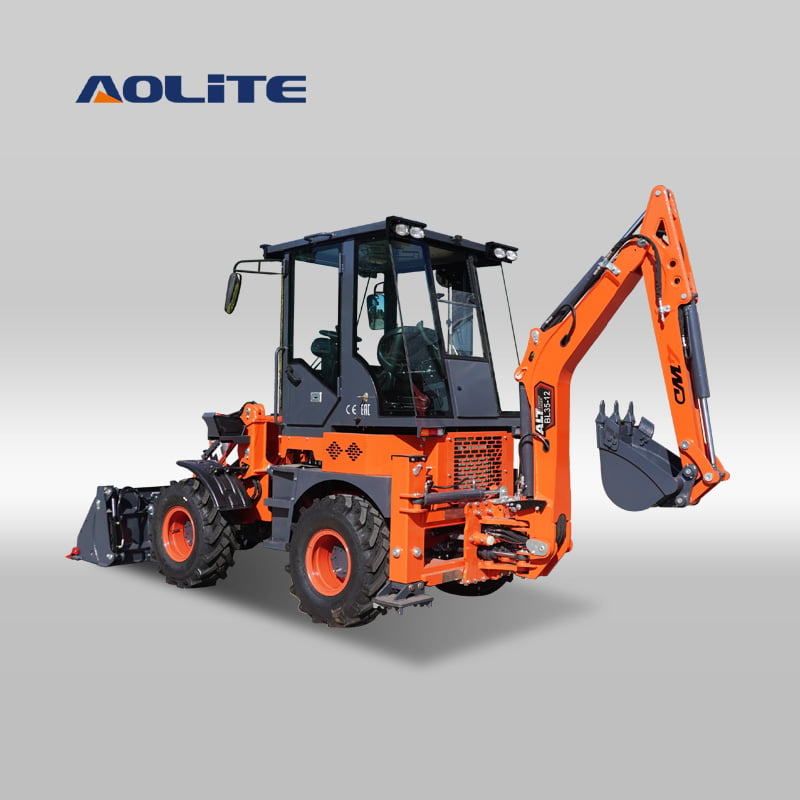
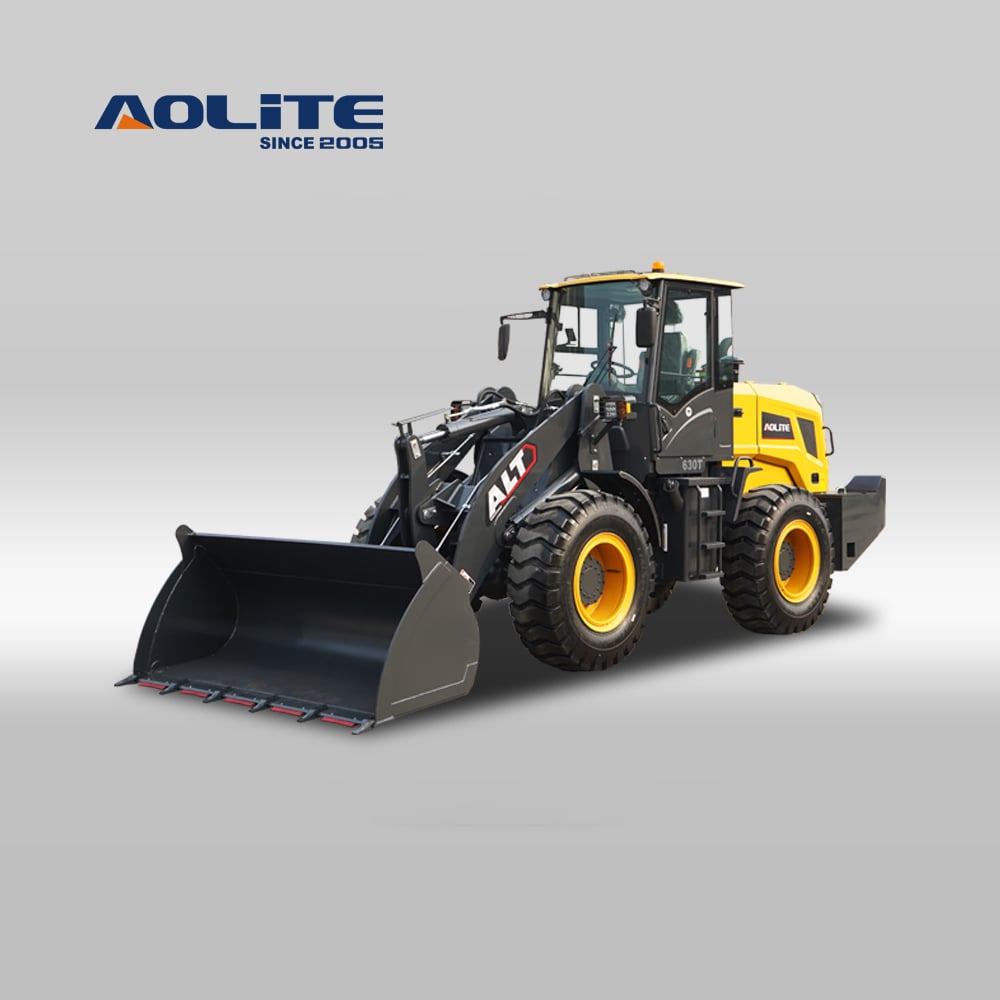
Taking the AOLITE loader as an example, its hydraulic system incorporates this "listening" mindset from the initial design stage. During digging operations, the resistance to the bucket inserting into the material pile changes drastically—the load increases sharply at the moment of insertion, and then changes again due to the weight of the material during lifting. Traditional fixed-displacement pump systems are ineffective in this regard; the engine drives the pump to continuously output full displacement, with excess flow overflowing from the multi-way valve, wasting fuel and causing the system to overheat. However, the load-sensitive hydraulic system used in the AOLITE loader senses pressure changes in the bucket and boom cylinders in real time through the LS oil circuit: when the bucket requires high thrust, the system automatically increases the pressure and matches the corresponding flow; when the bucket is raised or lowered, the system dynamically adjusts the pump's displacement according to the load. This system no longer outputs blindly, but rather, like an experienced operator, "hears" the sharp increase in resistance the moment the bucket enters the material, and then precisely delivers sufficient force.
II. Closed vs. Open: Confrontation Between Two System Philosophies
The traditional hydraulic system is a closed system whose decisions are made entirely internally—the pump's output is determined by its own set parameters, independent of external load. The direct consequence of this closed nature is that the system is extremely insensitive to external changes. Like someone who doesn't answer the phone, he stubbornly continues at his own pace regardless of what's happening outside. Under stable operating conditions, this closed nature may not be a major problem; however, once the load changes frequently, the closed system becomes cumbersome, sluggish, and wasteful.
The load-sensitive system, on the other hand, is an open system that establishes a real-time communication channel with the external load through the LS oil circuit, allowing the load's pressure signal to flow smoothly into the pump's decision center and participate in displacement adjustment. The pump no longer makes decisions alone but "negotiates" with the load. This openness is the core characteristic of load sensitivity as a way of thinking. It acknowledges a fundamental fact: the pump doesn't know what the load needs; only the load itself knows best. Therefore, the best control method is not to let the pump guess, but to let the load actively "speak" for itself.
This is similar to a common sense principle in management: a closed-minded manager who never consults subordinates when making decisions often produces results that are detached from reality; while an open-minded manager who listens first and then makes decisions results in more accurate and efficient outcomes. Load sensitivity is like an "open-minded manager" in a hydraulic system.
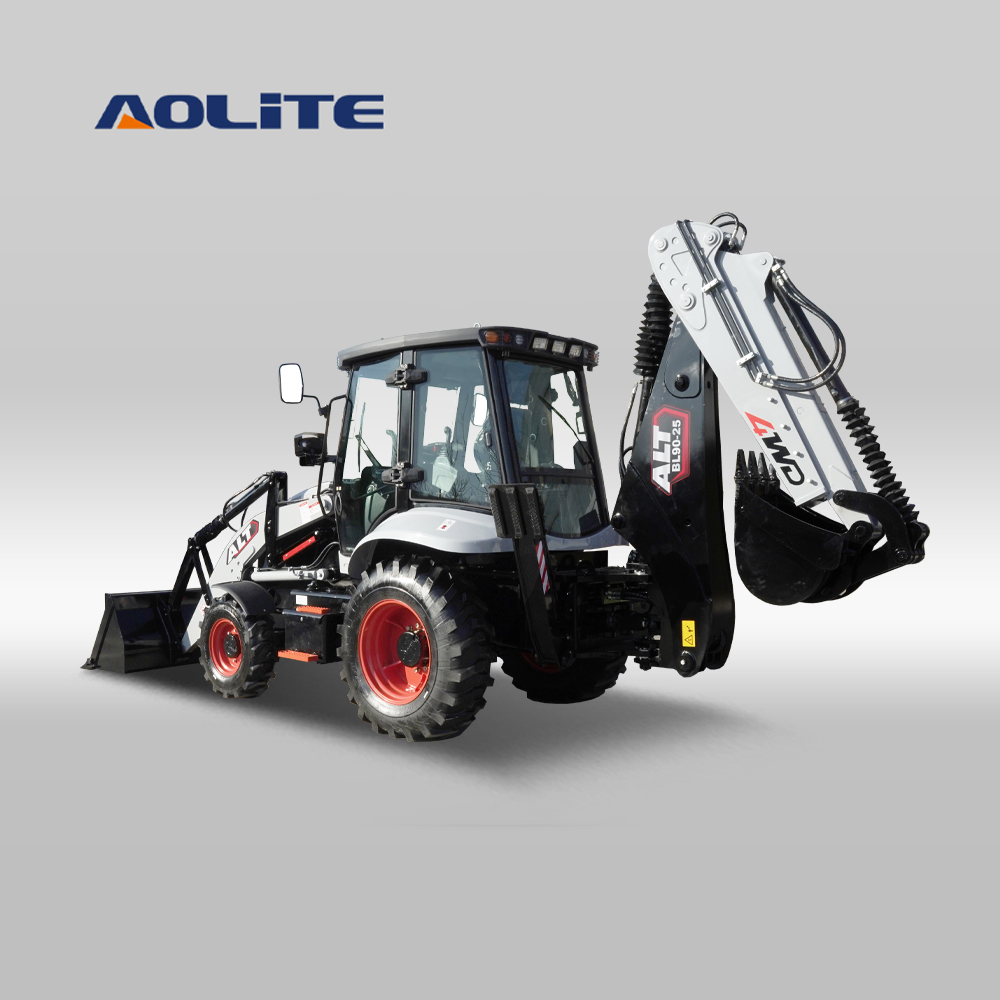
The working scenarios of the AOLITE backhoe loader are particularly typical. It needs to switch from front-end loading mode to rear-end digging mode in a very short time. Loading requires high flow rate and medium-low pressure to quickly raise the boom and tilt the bucket; while digging requires high pressure and medium-low flow rate to break hard soil. After adopting the load-sensitive system, the AOLITE backhoe loader achieves a "dialogue" between the pressure requirements of the front-end and rear-end working devices through the LS hydraulic circuit: when the operator switches from loading to digging, the pump can quickly sense the high-pressure requirement of the rear-end digging circuit, automatically reducing the displacement and increasing the output pressure; when switching back to loading, the pump can respond promptly to the high flow rate requirement. This open "dialogue" control allows a machine to switch freely between two completely different operating modes.
III. Feedback: Enabling the system to have self-awareness
Traditional hydraulic system lacks a true feedback loop; the pump outputs whatever amount is available, regardless of the actual effect. This is an open-loop approach: "I just do it, regardless of whether it's right or wrong." Load-sensitive systems, however, introduce a crucial feedback mechanism: the LS signal transmits the actual pressure from the load side back to the pump, which adjusts its output based on this real-time feedback. This is a closed-loop approach: "I output first, then observe the result, and then adjust based on the deviation." This "observe the result and adjust" process gives the hydraulic system, for the first time, "self-awareness"—it can perceive the actual effect of its output and make corrections accordingly.
The essence of feedback is to upgrade the system from one-way output to two-way dialogue. The LS oil circuit in a load-sensitive system is this dialogue channel. The pump says, "I'm giving you this much," and the load responds, "Not enough, more" or "Too much, less." The pump adjusts continuously based on the response until both parties reach an agreement.
In continuous loading and unloading operations, the feedback advantage of the load-sensitive system on the AOLITE loader is particularly evident. When the bucket is inserted into the material pile and lifted, the cylinder pressure dynamically fluctuates with the material lifting height and acceleration. The LS hydraulic circuit transmits these changes back to the pump regulator in milliseconds, and the pump then adjusts the swashplate angle to ensure that the output pressure is always higher than the maximum load pressure by a fixed pressure difference. Whether the bucket is in a low lifting position or a high unloading position, the system maintains just the right amount of pressure and flow. Operators will clearly feel a smoother engine sound, more responsive handling, and a significant reduction in fuel consumption for the same workload.
IV. From Brute Force to Intelligence: The Load-Sensitive Evolutionary Logic
Tracing the evolution of hydraulic systems reveals a clear trajectory: from relying on brute force to relying on intelligence. The earliest fixed-displacement pump systems relied on sheer size—large displacement, high pressure, and large oil tanks. What happened when problems arose? Larger relief valves, thicker pipes, and larger radiators. A significant amount of energy was wasted, with the oil dissipating as heat into the air. For a long time, no one saw anything wrong with this, as the idea that "hydraulic systems inherently generate heat" was almost an industry consensus. However, load-sensitive systems offer a different answer: what you don't need shouldn't be generated.
Load-sensitive systems take a different approach—they don't rely on "bigger," but on "cleverness." They achieve energy savings and high efficiency by sensing load, introducing feedback, and precise matching which reflects a simple philosophy: "enough is enough." It doesn't pursue more, but rather just enough. This thinking is uncommon in engineering, where the mainstream approach is "redundancy for safety." However, load-sensitive thinking reminds us that excessive redundancy is wasteful; true wisdom lies in controlling redundancy within a reasonable range while fulfilling functional requirements.
At highway construction sites, AOLITE backhoe loaders often require alternating "digging" and "loading" operations, with cycles reaching dozens of times per hour. If a traditional fixed-displacement pump system were used, a large amount of flow would overflow from the main control valve during each switch, wasting fuel and accelerating oil aging. AOLITE's introduction of a load-sensitive variable displacement pump ensures that the pump's displacement always follows the actual needs of the upstream and downstream working devices: during digging, it senses the breaking resistance and automatically matches high pressure and low flow; during loading, it switches to high flow and medium-low pressure; and during standby, the pump almost returns to its minimum displacement. This "on-demand production" mode allows the backhoe loader to always operate in its most efficient range. Actual test data shows fuel savings of 18%-22%, a reduction in system oil temperature of approximately 8-10°C, and a significant extension of hydraulic component lifespan.
The essence of load-sensitive thinking is respect for energy. It knows that every bit of energy is not easy to get: diesel is extracted from the ground and electricity is converted from coal, water or wind. Waste of energy is the greatest failure of resources. This is the value of "intelligence": not by increasing resource investment, but by avoiding unnecessary waste to achieve system optimization.
V. Conclusion: The Enduring Power of a Way of Thinking
Load-sensitive technology has been around for over half a century. Its hardware has continuously evolved: from purely mechanical to electro-hydraulic proportional control, and then to digital control and electric coordination. But its mindset has remained constant: sense demand, match output, and not waste a single drop of excess energy.
The enduring power of this way of thinking stems from its addressing a fundamental question: any system that doesn't know what its users truly need cannot achieve true efficiency. This principle applies equally to hydraulic systems, management organizations, and personal growth.
Load sensitivity teaches us true wisdom: it's not about how much force you can output, but about knowing when and how much to output which is not only the control philosophy of hydraulic systems, but also a valuable life lesson. As proven by AOLITE loaders and backhoe loaders on countless construction sites—listening to the load and supplying on demand not only improves machine efficiency but also shows respect and appreciation for every bit of energy. Pumps may be replaced, valves upgraded, and hydraulic circuits redesigned, but this core concept of "sensing first, then responding" will continue. Because this is the fundamental logic that no efficient system can bypass.
 Hot News
2026-09-30
2026-09-15
2026-08-31
2026-08-21
2026-08-07
2026-07-22
Copyright © Qingzhou Longfeng Machinery Technology Co., Ltd. All Rights Reserved — Privacy Policy
 EN
EN